Scandinavian Coffee Table
I have always held a passion for the sleek and minimalist approach of Scandinavian furniture, especially the 1950’s/1960’s retro style designs. The high quality of construction and the superior finish of materials together with a sculptural approach to the design process inspires me.
I wanted to produce a coffee table to emulate the modern and elegant Scandinavian designers. Alvar Aalto and Hans Wegner are two examples who are still proving to be very popular today.
Birch Plywood was predominantly incorporated by Alvar Aalto in his innovative furniture designs including bent plywood, which influenced many furniture designers worldwide.
The challenge I set myself was to produce a high quality functional coffee table incorporating light colours and a minimal style, while simultaneously sourcing as many materials as I could salvage and reutilise for my project.
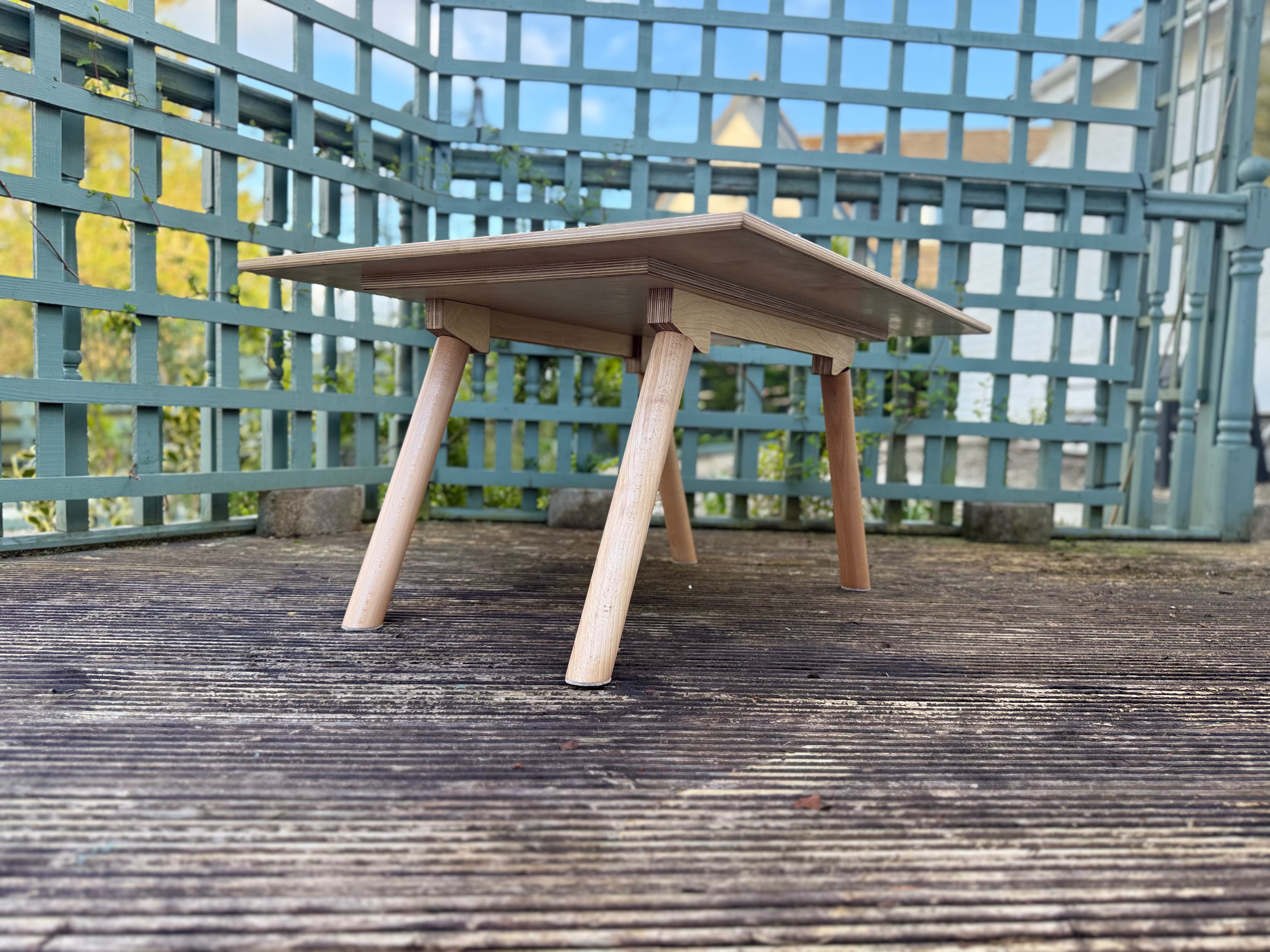
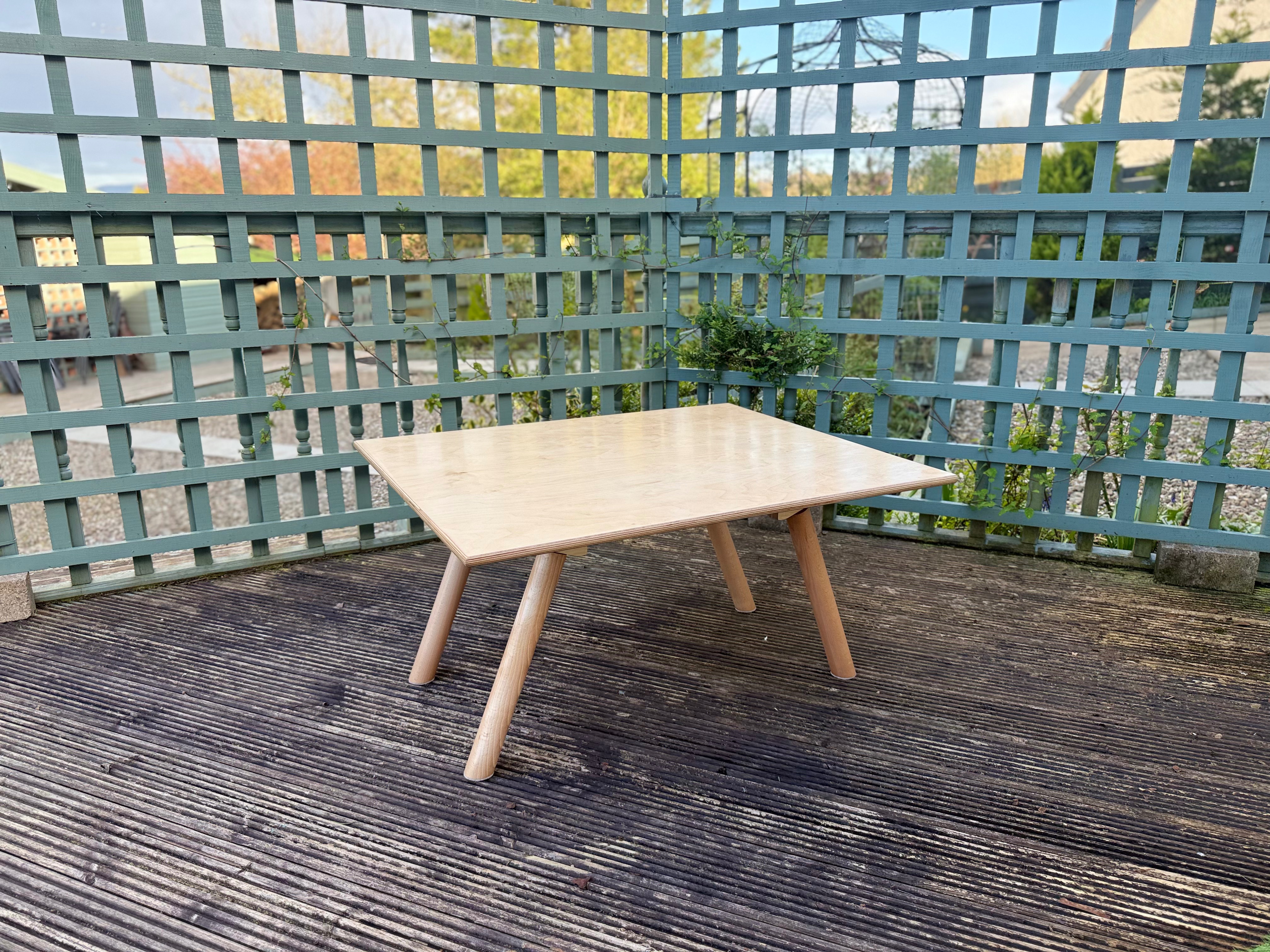
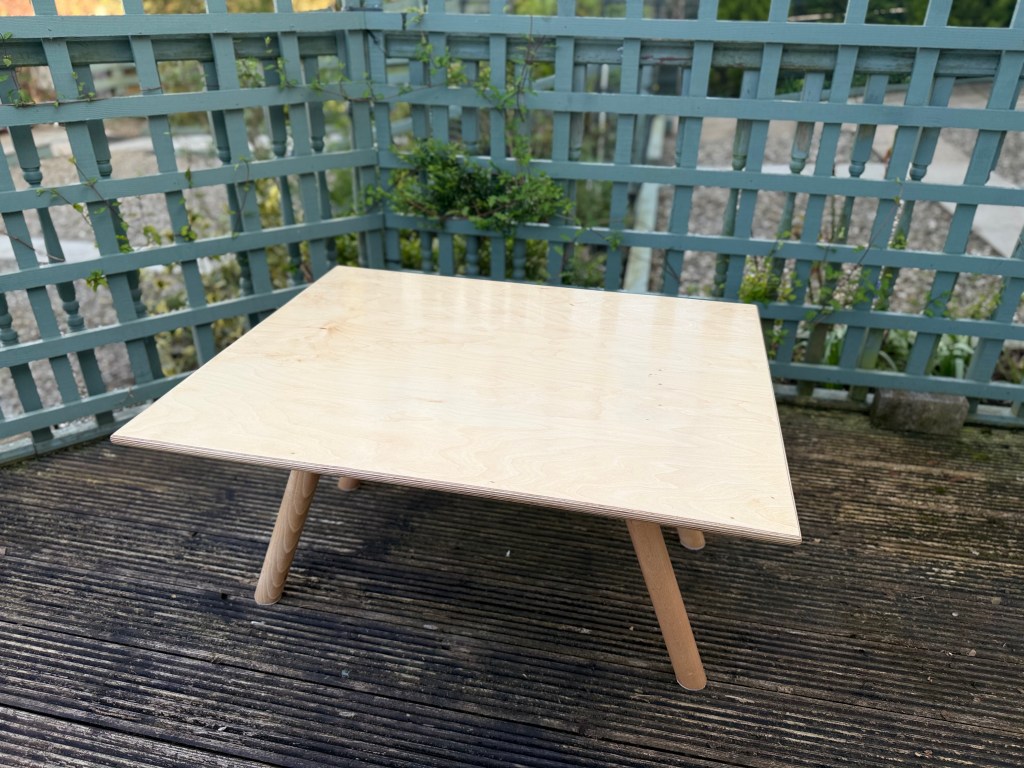
Process
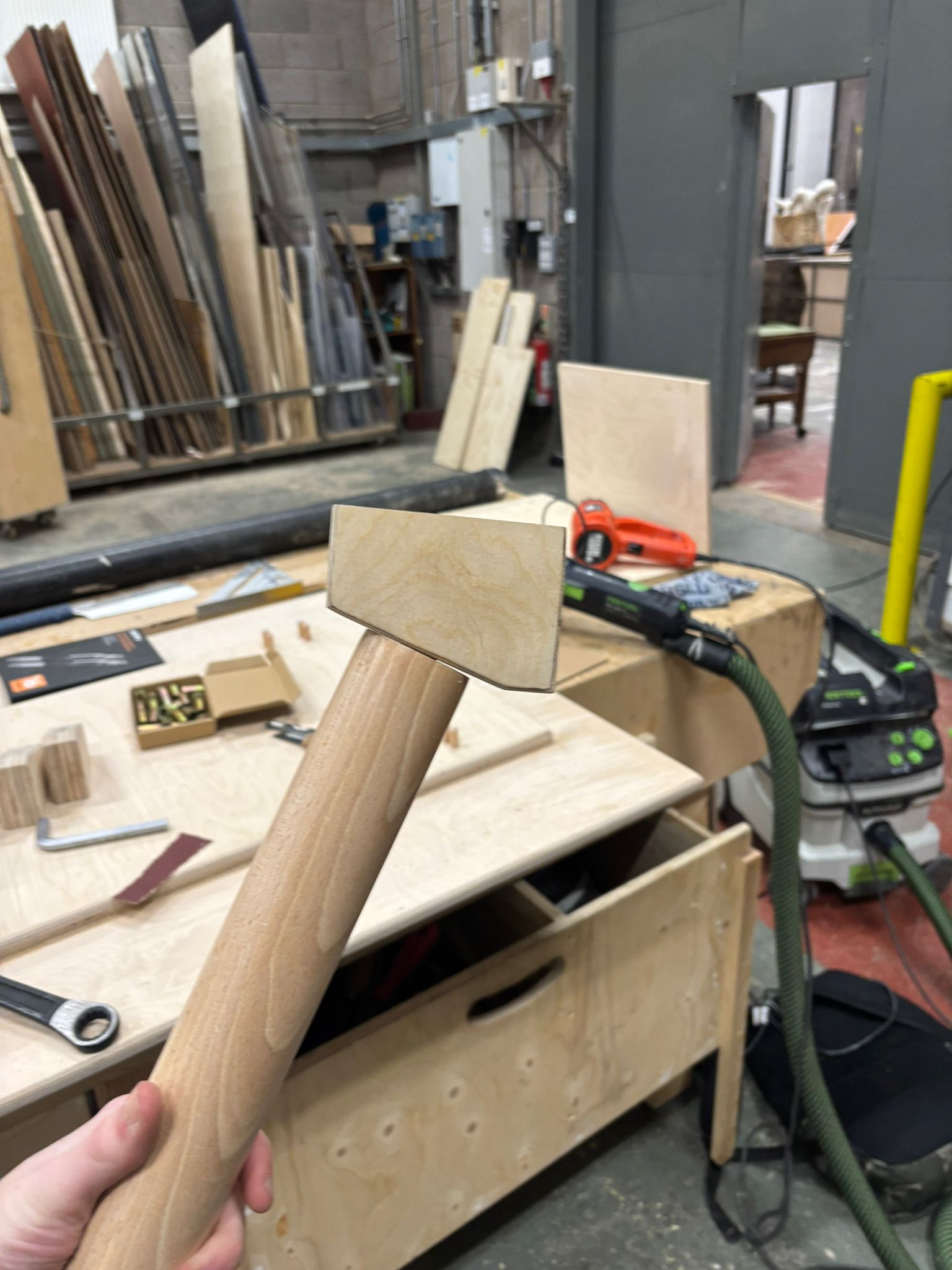
Threaded Inserts
I incorporated threaded inserts into my design to attach the legs to the main body of the coffee table, aiming to create a seamless look with all hardware and attachments hidden.
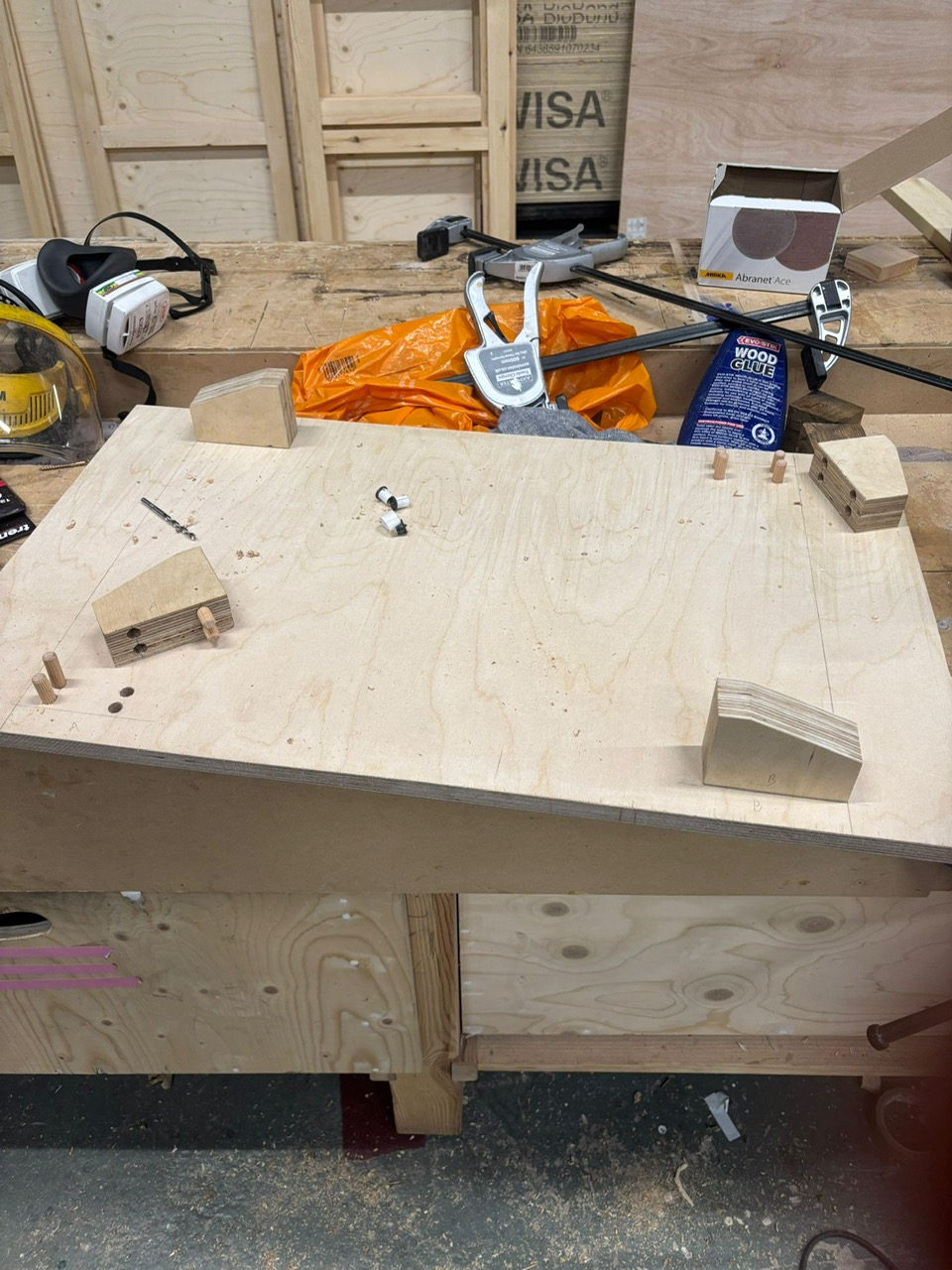
Wooden Dowels
I decided to use wooden dowels to laminate all of the components of the main body together. This retained the seamless look of the table with all the fixings being hidden, while also forming a very strong bond between the table base and the blocks.
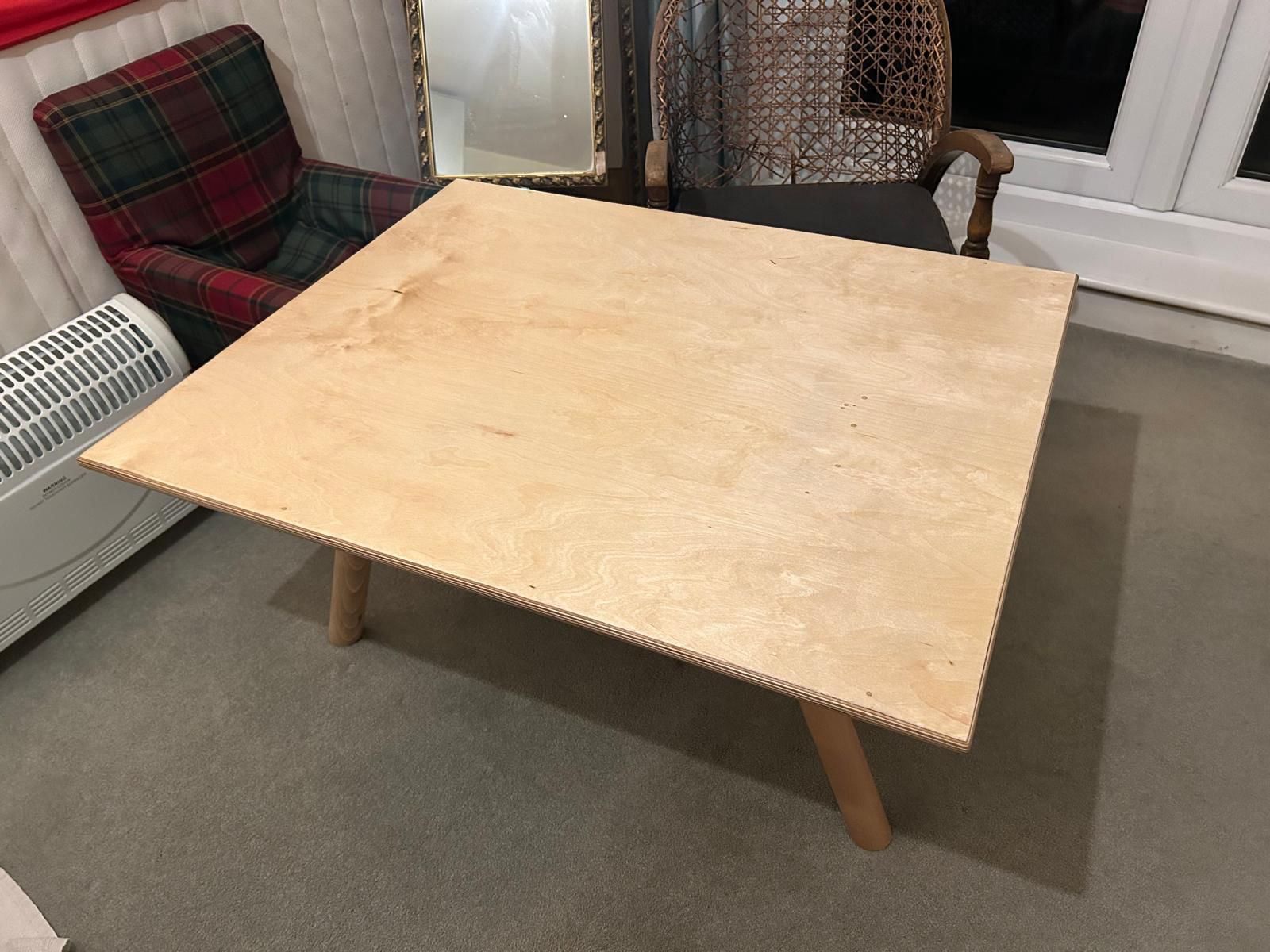
Finishing
I spent many hours on the finishing stage of this project by using different grits of sandpaper going up to 800 grit to create a smooth and even finish, which was elevated by applying layers of oil to the table and polishing in between.
Industrial Bench
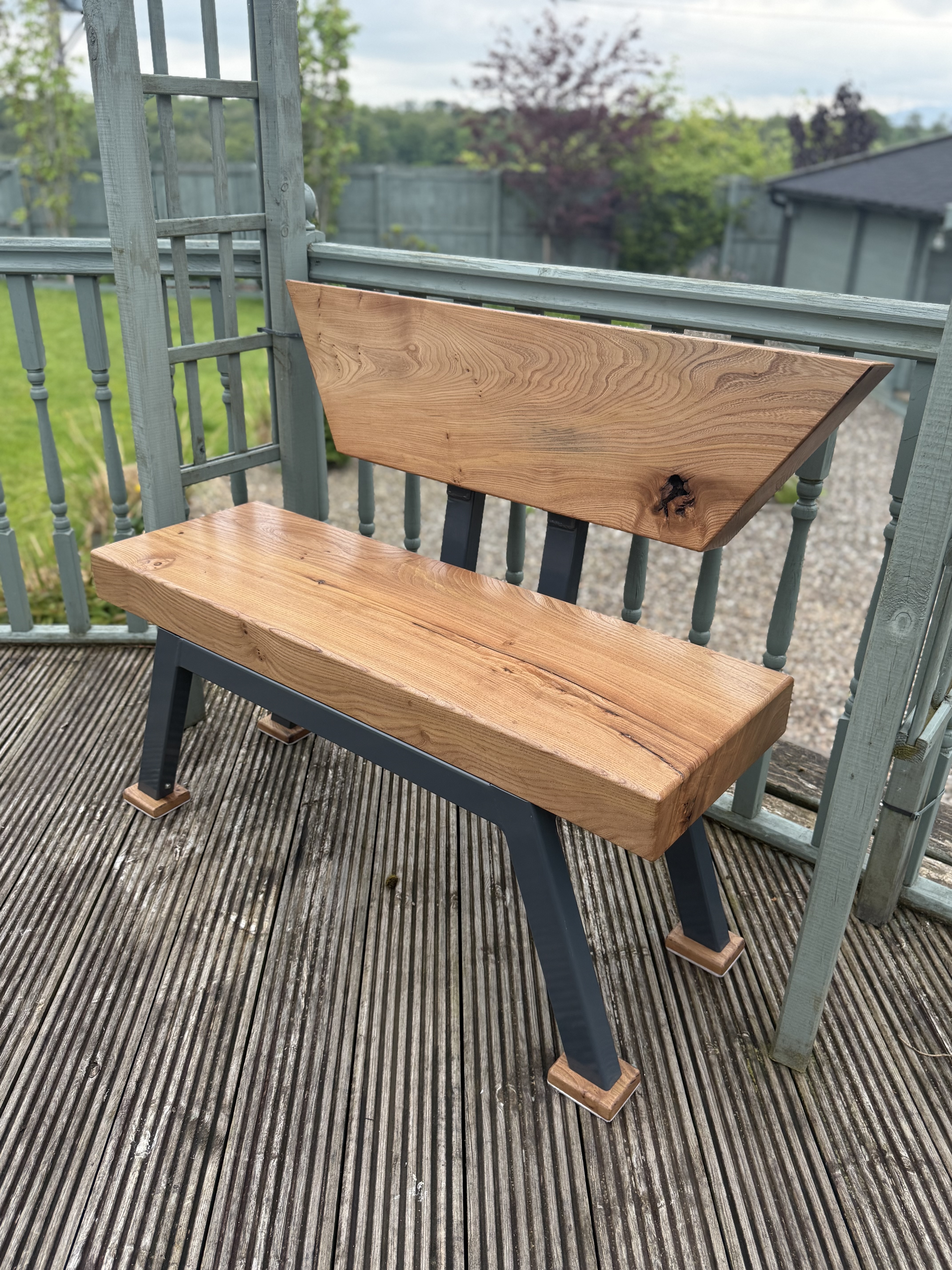
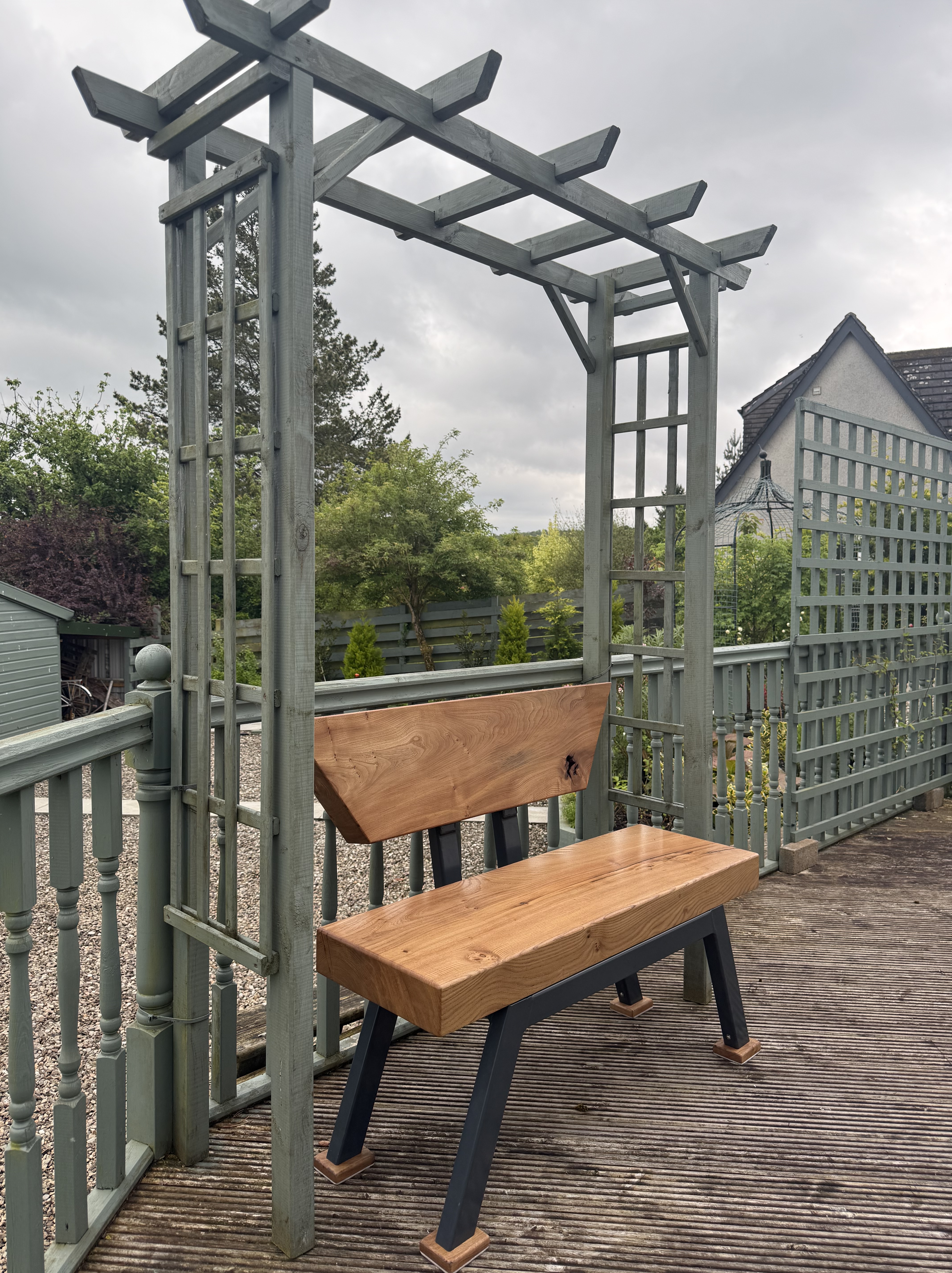
One of my ambitions as a carpenter is to craft industrial style furniture and I decided to create a unique piece of furniture for my first project – an industrial bench. This was constructed from a large scale hardwood slab of Elm which spanned over two and a half metres long and over a hundred millimetres thick.
The selection of the materials was one of my initial considerations for both the design and construction process of the bench, and this was just as important as the design method for the overall concept of the bench.
I had to consider many factors such as materials that could be readily sourced, compliment my initial sketch designs and match the standards of industrial design. Being aware of budgeting for this project, I had to be comfortable with my skills for handling the selected materials.
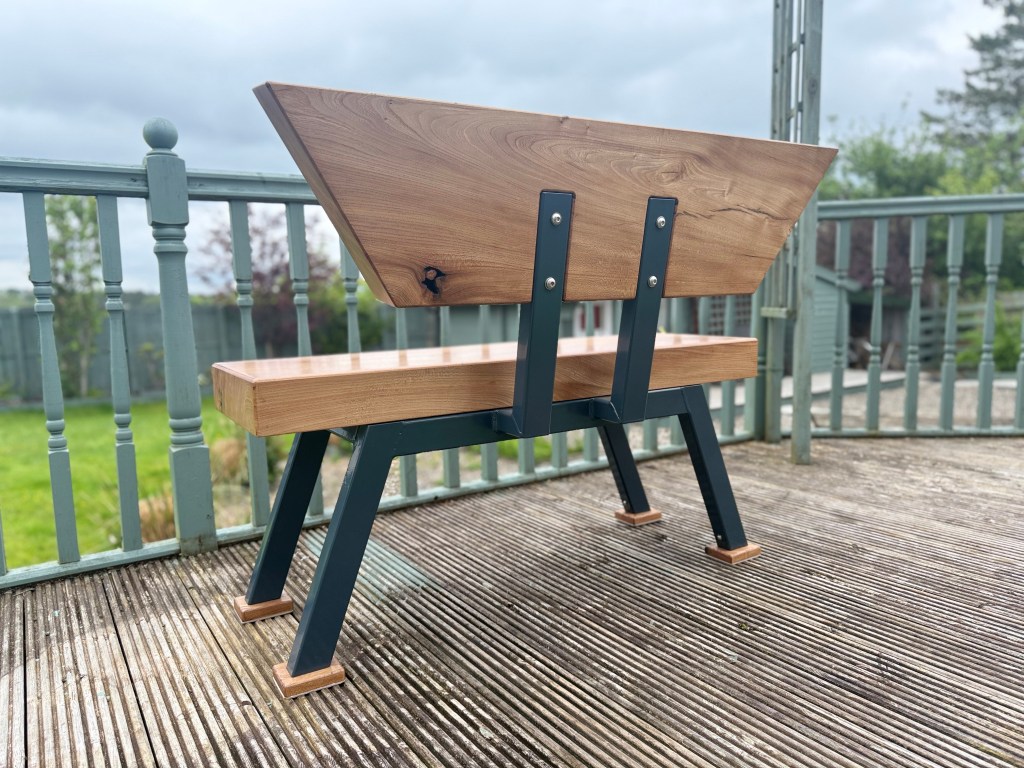
Process
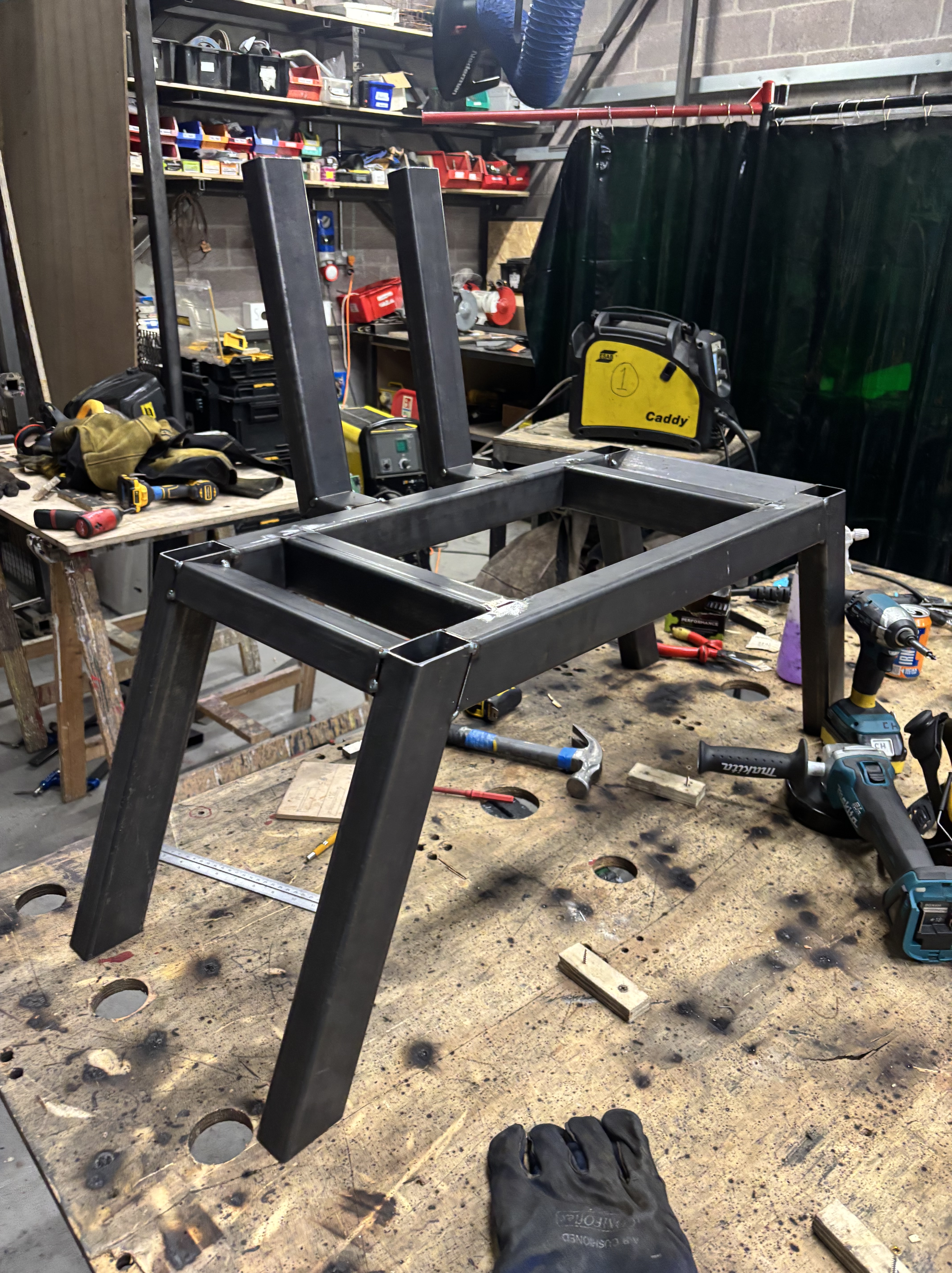
Fabricating
This project helped further develop my fabrication skills as I made the steel frame out of 3mm box steel, which has to be cut to length and the angles for the components had to be welded together. The frame then had to be grinded and polished back.
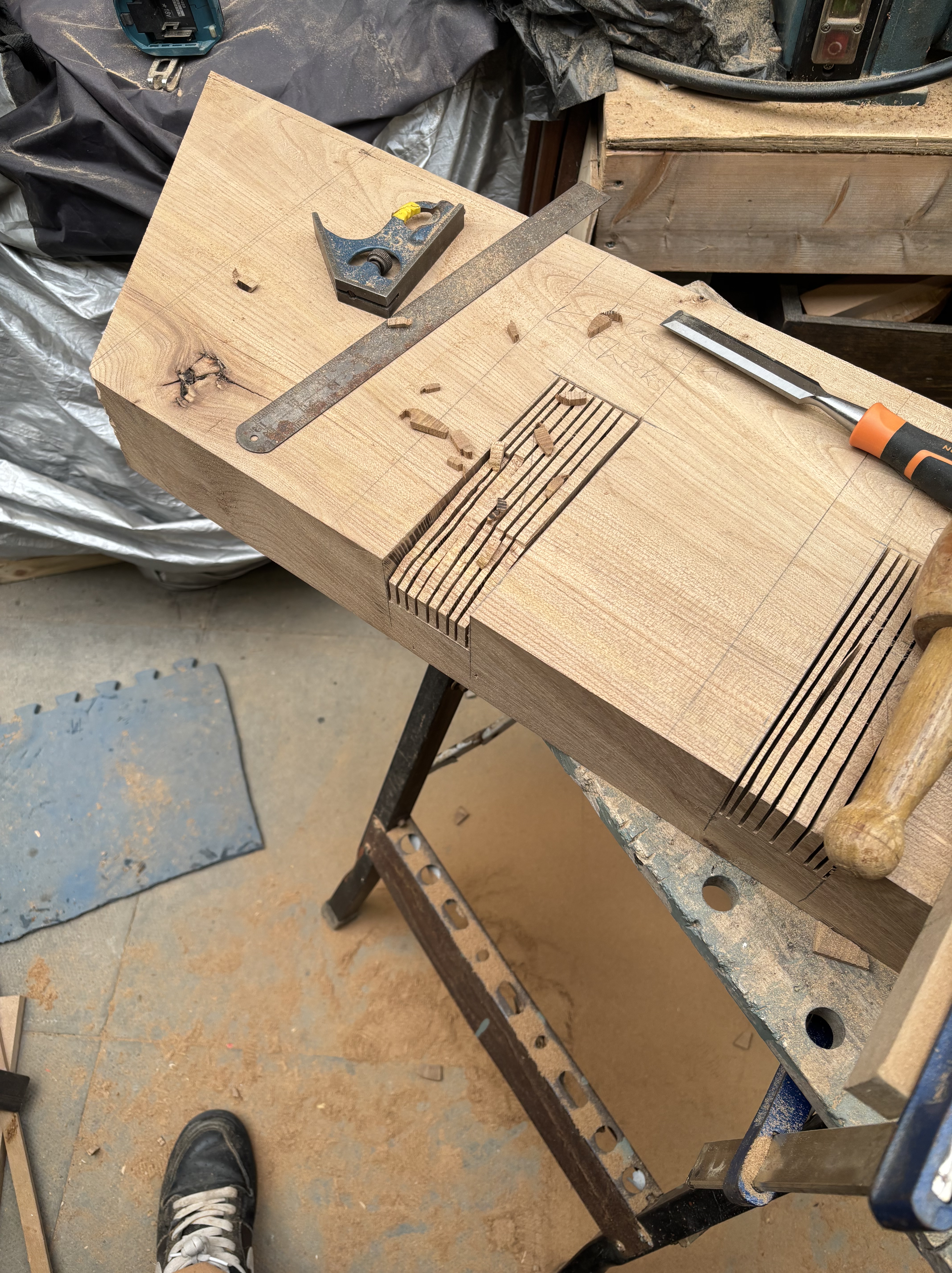
Checks
I had to mark, measure and scribe to check out two sections into the back slab of wood, creating two slots which the steel arms of the frame would set in flush to the surface of the slabs.
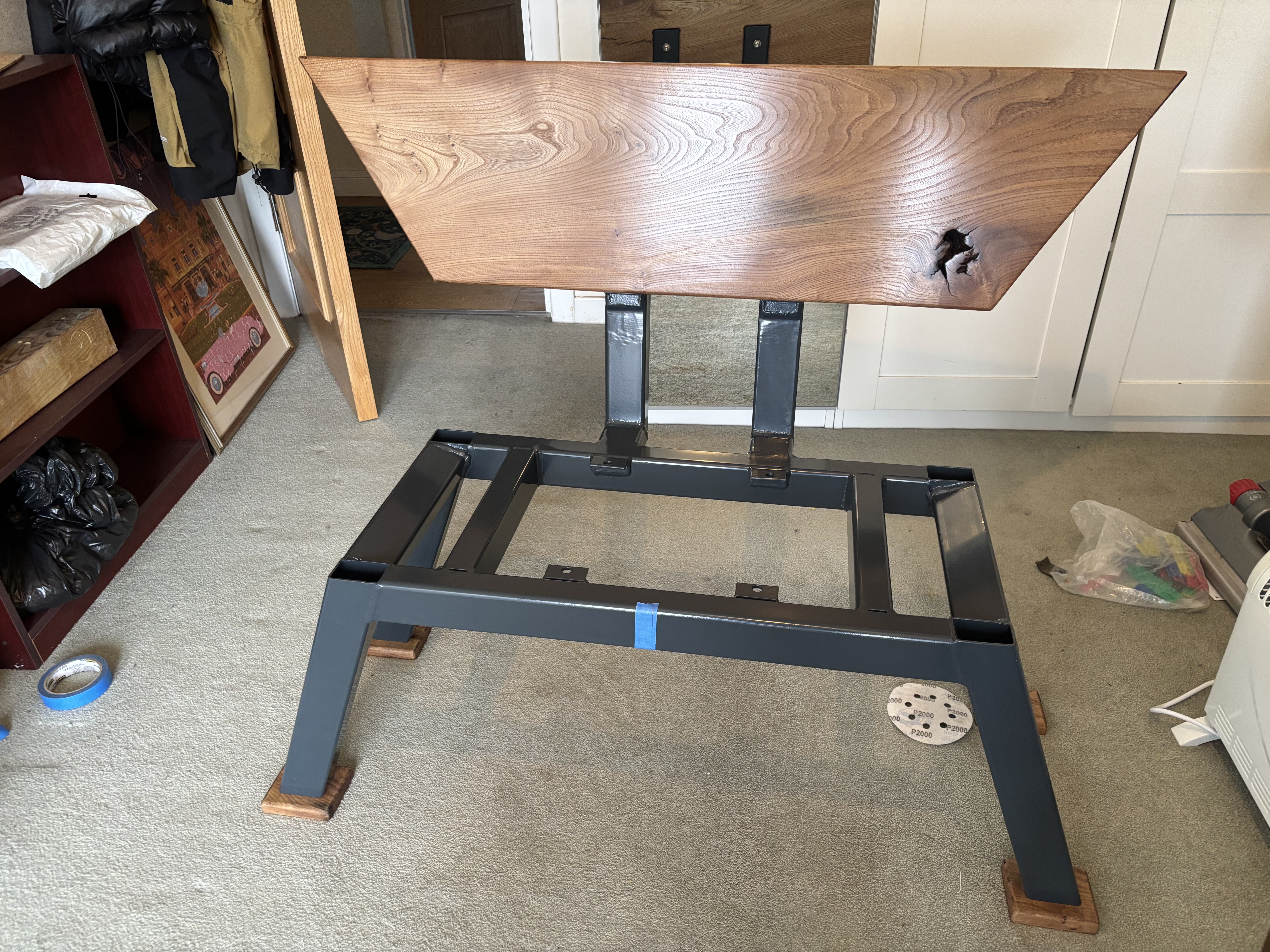
Assembling
With the use of my pre-drilled holes in the steel frame, I leveled and marked up all of the wood components which allowed me to drill and sink in threaded inserts into the wood. I then secured all of the wood elements to the frame by using dome headed bolts.

